


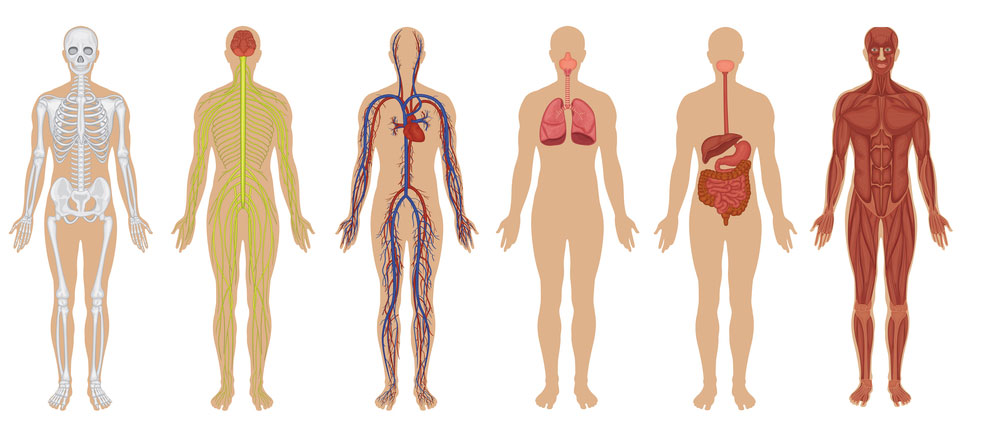
The human body is made up of a number of systems that work together to keep us from falling apart. The idea is to keep these systems maintained, clean and happy so these systems can work as they need to to keep our bodies not just functioning, but functioning optimally.
The job of the circulatory system is to move blood, nutrients, oxygen, carbon dioxide, and hormones, around the body. It consists of the heart, blood, blood vessels, arteries and veins.
The digestive system consists of a series of connected organs that allow the body to break down and absorb food, and remove waste. It includes the mouth, oesophagus, stomach, small intestine, large intestine, rectum, and anus. The liver and pancreas also play a role in the digestive system because they produce digestive juices.
The endocrine system consists of eight major glands that secrete hormones into the blood. These hormones, in turn, travel to different tissues and regulate various bodily functions, such as metabolism, growth and sexual function.
The immune system is the body’s defense against bacteria, viruses and other pathogens that may be harmful. It includes lymph nodes, the spleen, bone marrow, lymphocytes (including B-cells and T-cells), the thymus and leukocytes, which are white blood cells.
The lymphatic system includes lymph nodes, lymph ducts and lymph vessels, and also plays a role in the body’s defenses. Its main job is to make is to make and move lymph, a clear fluid that contains white blood cells, which help the body fight infection. The lymphatic system also removes excess lymph fluid from bodily tissues, and returns it to the blood.
The nervous system controls both voluntary action (like conscious movement) and involuntary actions (like breathing), and sends signals to different parts of the body. The central nervous system includes the brain and spinal cord. The peripheral nervous system consists of nerves that connect every other part of the body to the central nervous system.
The body’s muscular system consists of about 650 muscles that aid in movement, blood flow and other bodily functions. There are three types of muscle: skeletal muscle which is connected to bone and helps with voluntary movement, smooth muscle which is found inside organs and helps to move substances through organs, and cardiac muscle which is found in the heart and helps pump blood.
The reproductive system allows humans to reproduce. The male reproductive system includes the penis and the testes, which produce sperm. The female reproductive system consists of the vagina, the uterus and the ovaries, which produce eggs. During conception, a sperm cell fuses with an egg cell, which creates a fertilized egg that implants and grows in the uterus.
Our bodies are supported by the skeletal system, which consists of 206 bones that are connected by tendons, ligaments and cartilage. The skeleton not only helps us move, but it’s also involved in the production of blood cells and the storage of calcium. The teeth are also part of the skeletal system, but they aren’t considered bones.
The respiratory system allows us to take in vital oxygen and expel carbon dioxide in a process we call breathing. It consists mainly of the trachea, the diaphragm and the lungs.
The urinary system helps eliminate a waste product called urea from the body, which is produced when certain foods are broken down. The whole system includes two kidneys, two ureters, the bladder, two sphincter muscles and the urethra. Urine produced by the kidneys travels down the ureters to the bladder, and exits the body through the urethra.
The skin, or integumentary system, is the body’s largest organ. It protects us from the outside world, and is our first defense against bacteria, viruses and other pathogens. Our skin also helps regulate body temperature and eliminate waste through perspiration. In addition to skin, the integumentary system includes hair and nails.

Bahya pranayama is a yogic breathing technique that consists of a deep inhalation, full exhalation, and holding this full exhalation while enforcing 3 ‘locks’ in the chin, abdomen and naval/pelvis. It is beneficial for diseases pertaining to organs in the abdominal cavity.
Bahya – external, outside
Kumbhaka – retain, suspend
Pranayama – breath
Bandha – lock, hold, bind
This pranayama is best done after Kapalbhati – you make most efficient use of the built up energy from Kapalbhati in this pranayama.
Contraindications
Do not practice this pranayama if you have heart problems, high blood pressure, have colitis, or are sick with fever.
Source: Swami Ramdev Maharaj

Green tea comes from the Camellia Sinensis plant, the same plant that produces black tea and oolong tea. Different types of processing determine the tea classification. Green tea does not undergo fermentation, and as a result it contains the highest antioxidant levels of the three types of tea.
One of the more powerful compounds in green tea is the antioxidant Epigallocatechin Gallate (EGCG), which has been studied to treat various diseases and may be one of the main reasons green tea has such powerful medicinal properties.
It is well known that oxidative damage contributes to the development of cancer and that antioxidants can have a protective effect (1). Green tea helps reduce the risk of cancer. The antioxidant in green tea is 100 times more effective than vitamin C and 25 times better than vitamin E. This helps your body at protecting cells from damage believed to be linked to cancer.
Green tea is an excellent source of powerful antioxidants, so it makes perfect sense that it could reduce your risk of cancer, which it appears to do:
Polyphenols and flavenoids found in green tea help boost your immune system, making your health stronger in fighting against infections.
Green tea prevents you from getting a cold or flu. Vitamin C in green tea helps you treat the flu and the common cold.
Theophylline in green tea relaxes the muscles which support the bronchial tubes, reducing the severity of asthma.
L-theanine, which is a kind of amino acids in green tea, can help relieve stress and anxiety.
EGCG found in green tea relieves allergies. So, if you have allergies, you should really consider drinking green tea.
Green tea helps prevent heart disease and stroke by lowering the level of cholesterol. Even after the heart attack, it prevents cell deaths and speeds up the recovery of heart cells.
Green tea contains antioxidant known as polyphenols which fight against free radicals. What this means it helps you fight against aging and promotes longevity.
Green tea helps with your body weight loss. Green tea burns fat and boosts your metabolism rate naturally.
Antioxidant in green tea protects the skin from the harmful effects of free radicals, which cause wrinkling and skin aging. Green tea also helps fight against skin cancer.
Green tea can help prevent and reduce the risk of rheumatoid arthritis. Green tea has benefit for your health as it protects the cartilage by blocking the enzyme that destroys cartilage.
The very key to this is high fluoride content found in green tea. It helps keep your bones strong. If you drink green tea every day, this will help you preserve your bone density.
Green tea can help lower cholesterol level. It also improves the ratio of good cholesterol to bad cholesterol, by reducing bad cholesterol level.
Green tea prevents obesity by stopping the movement of glucose in fat cells. If you are on a healthy diet, exercise regularly and drink green tea, it is unlikely you’ll be obese.
Green tea improves lipid and glucose metabolisms, prevents sharp increases in blood sugar level, and balances your metabolism rate. Some controlled trials show that green tea can cause mild reductions in blood sugar levels. It lowers the risk of developing type II diabetes in the long term.
Green tea helps boost your memory. And although there’s no cure for Alzheimer’s, it helps slow the process of reduced acetylcholine in the brain, which leads to Alzheimer’s. The bioactive compounds in green tea can have various protective effects on neurons and may reduce the risk of both Alzheimer’s and Parkinson’s, the two most common neurodegenerative disorders.
Antioxidants in green tea helps prevent against cell damage in the brain, which could cause Parkinson’s. People drinking green tea also are less likely to progress with Parkinson’s.
Green tea helps prevent transplant failure in people with liver failure. Researches showed that green tea destroys harmful free radicals in fatty livers.
Green tea helps prevent high blood pressure. Drinking green tea helps keep your blood pressure down by repressing angiotensin, which leads to high blood pressure.
Catechin found in green tea can kill bacteria which causes food poisoning and kills the toxins produced by those bacteria.
Blood sugar tends to increase with age, but polyphenols and polysaccharides in green tea help lower your blood sugar level.
Green tea helps with ear infection problem. For natural ear cleaning, soak a cotton ball in green tea and clean the infected ear.
Green tea increases the effectiveness of topical interferon treatment of herpes. First green tea compress is applied, and then let the skin dry before the interferon treatment.
Green tea destroys bacteria and viruses that cause many dental diseases. It also slows the growth of bacteria (streptococcus mutans is the primary harmful bacteria in the mouth) which causes plaque formation and is a leading contributor to cavities, tooth decay and bad breath.
Scientists in Japan have found that EGCG (Epigallocatechin Gallate) in green tea can stop HIV from binding to healthy immune cells.
What this means is that green tea can help stop the HIV virus from spreading.
http://www.naturalnews.com/041514_green_tea_health_benefits_fluoride_levels.html#ixzz2my4c3kSw http://www.livestrong.com/article/512652-are-there-any-negative-reasons-not-to-drink-green-tea/#ixzz2my8Hvd00